Excluding the decline in consumer spending during the second half of ‘05 due to hurricane Katrina, consumption has been the weakest since 2002. As depicted by the following graph, real personal consumer expenditures (PCE) has been nearly flat over the last four months:
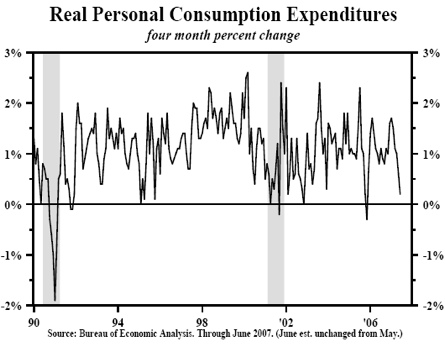
I believe that consumer spending would come under pressure as soon as the housing bubble popped. Despite plummeting home sales and stagnating home prices during most of last year, consumer spending did not immediately suffer. Why? I have three explanations:
- There is a lag of several months between when businesses begin to struggle and when they actually layoff workers. So the hundreds of thousands of construction, lending and realtor jobs created during the housing boom are only beginning to be reduced. Non-farm household employment, an alternative jobs measure that historically has been more accurate at cyclical turning points, expanded 45,000 per month this year compared to a 235,000 average monthly gain in 2006, an 80% decline.
- Mortgage equity withdrawals (MEW) represented over 5% of personal disposable income until this year. With tighter lending standards, higher interest rates, and falling home prices you can bet that MEW will fall even further.
- Real personal disposable income grew by 2.6% last year after rising by only 1.2% in 2005. For the first 5 months of this year, real disposable income has increased by only 0.5%.
Add to all this the rise in food prices, gasoline prices, and interest rates, and the sluggish PCE and sales that retailers have been reporting lately may be the beginning of a more protracted downturn in consumer spending, which represented about 68% of US economic activity during the first quarter. My forecast of a 2007 recession still looks possible.
