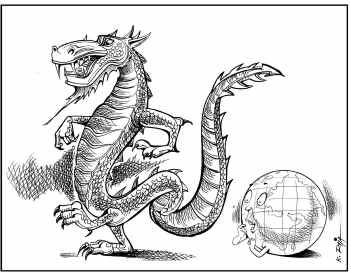
The Chinese growth story has received an enormous amount of press in recent years. Indeed, after a lull during the late nineties, China’s economy began to accelerate growth in 2002 and has been averaging 10% since then. It is now the 4th largest economy in the world after US, Japan and Germany.
There were two factors that triggered the economy’s emergence in 2002. First, China joined the WTO just a year earlier. Second, US consumer spending started to rebound after a brief recession. As a result, Chinese exports which were already high began to sky rocket.

The US is China’s largest export market accounting for 60% of its total exports or 6% of GDP growth. But we are now starting to see the US economy slow down. If the U.S. were to fall into a recession, how much of a negative impact would this have on China? Not much if you listen to the China bulls who argue that it is internal demand that has been fueling China’s growth.
Though consumer spending has been growing, it has not kept pace with export growth. The following graph depicts consumption’s declining share of the economy:
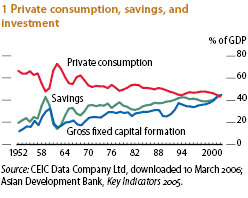
Also note from the graph that capital investments have surged along with exports and now constitute the largest source of demand for the economy. But most of these investments have been allocated to building infrastructure to expand the manufacturing sector. Therefore, China’s investing boom is dependent on a healthy export environment. A decline in exports would lead to overcapacity, lower profits, and widespread bankruptcies.
The bottom line is that China has become the manufacturer for the US. Trade between the two countries has reached an unprecedented level and both are very dependent on each other. China needs healthy consumer spending in the US to keep its factories busy. The US needs China’s cheap goods and savings to finance purchases.
But when the US eventually falls into a recession expect China’s growth of exports and investments to decline. The economy will decelerate to low-single digit growth or, possibly negative growth. However, China’s huge foreign exchange reserves should serve to cushion the economy from any protracted slowdown.
Though I am bearish on China for the next few years, I am bullish in the very long term. The government’s economic liberalization is at an early stage with many reforms still needed. In the coming decades, China should experience greater growth than the West. In fact, 50 years from now don’t be surprised to see China enjoying the same status in the world as the US does today! But for the time being my money is out of China.
